
An Interview with Cities: Skylines 2 developer’s CEO, Mariina Hallikainen
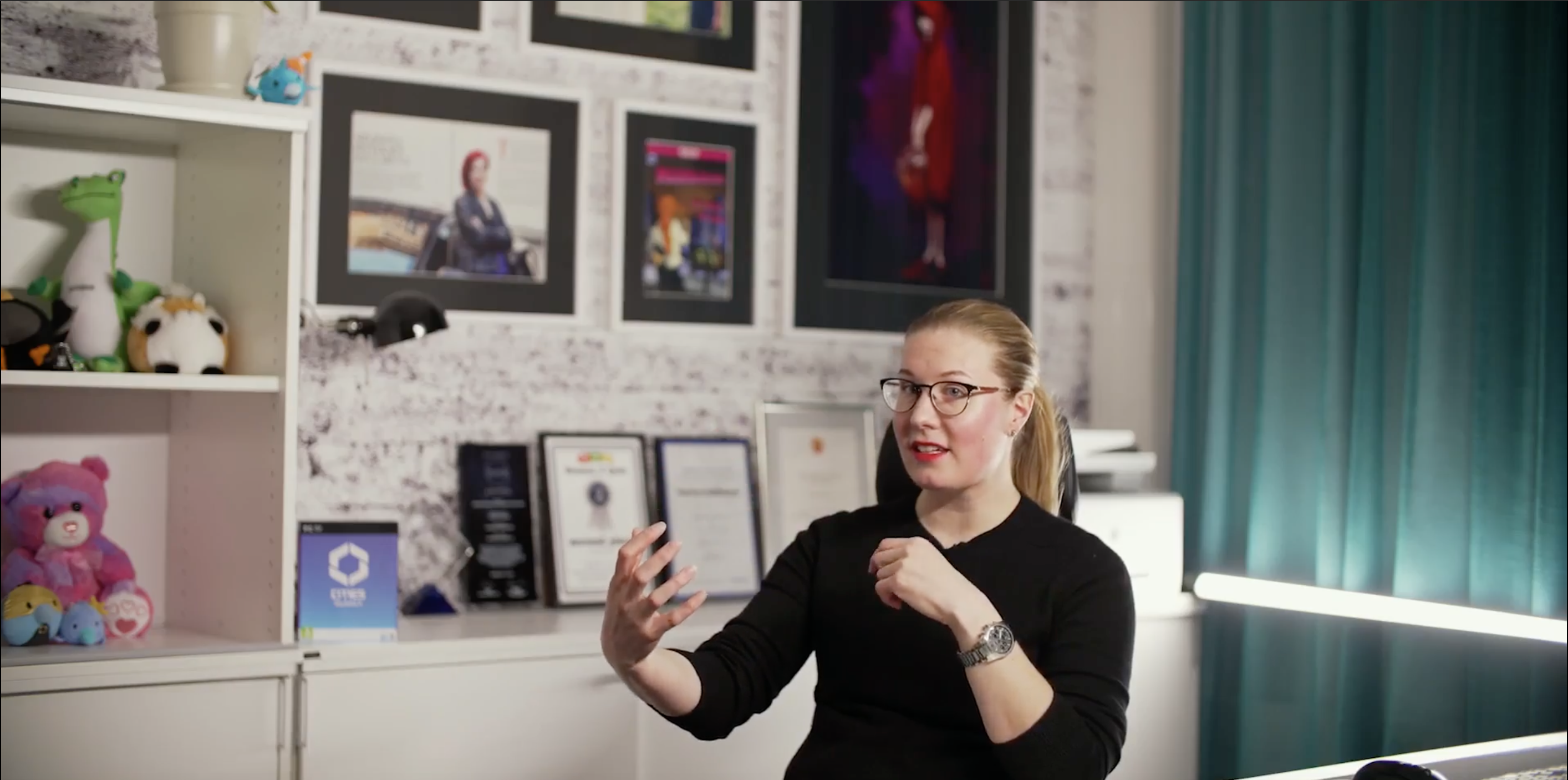
Hallikainen: We have one more patch coming out for Cities: Skylines 2 before [the holidays]. Then we have a few missing things that we absolutely want to get done as fast as possible. That is the modding support, which is very, very important for us, and also for the community. So that's something that we will continue to work on in the new year. And, of course, the missing platforms, the console ports, are something that had to be delayed. So that's a high priority for us. When it comes to bug-fixing, performance, we still have work to do. But we have already been able to move forward with certain aspects of the game, but there's still, for sure, work to be done. Ars: You described the console ports as missing. Were those originally planned for simultaneous launch?
Hallikainen: The game was supposed to launch on all supported platforms or planned platforms—that's PC and Xbox Series S and X, and PS5. And with... the modding support, as we planned it to have, the editor, the code modding support. And with the modding, it's something that we will be continuing to work on in the future as well, based on the player feedback. So, for example, the character modding is not going to be there any time soon. That's a technically difficult thing to support. So that was already planned to be coming later. But of course, we wanted to have the basic support out there already at launch. Ars: Can you tell me a little bit about the decision to release—when it was decided, somewhere between "We could work on this forever" and "Now it's time to put something out there"?
Hallikainen: For us, of course, it's a joint decision between the developer and the publisher. And I have to say that working with Paradox (Interactive) has been good with the project, in the sense that we have been able to align on major decisions. So I'm very grateful about that. When it comes to the launch… There is a moment in a project where the added time doesn't really bring such a great benefit anymore. And when it comes to Cities: Skylines 2, this project has been extremely tough on us. It has been extremely difficult. We've had multiple setbacks, technical issues… I feel that the project hasn't been moving forward anywhere in the timeline that we anticipated and hoped for. So the game is, actually today, almost three years late. So we're talking about a massive significant delay in the whole production of the game. We felt very confident with the announced release date; before we weren't confident anymore (laughs). So we saw that we're getting behind on certain aspects… we push the consoles to next year. With the PC release, we felt that it is more important to respect the announced date, because we believed that the game is good enough on PC to be released. Like, we felt that adding a few months more, it wouldn't make such a significant improvement to the game that we should delay the PC launch. Ars: If there was a graph of, say, effort to returns, you were starting to get into the curve where maybe another month of effort was not the same as another month way back when? Hallikainen: Yeah, exactly. It really felt like [close to release] we're not getting the progress that we need. So for us, it was just time to kind of let go and see how this goes. But the thing is that for us, it was very, very important not to disappoint the fans that were waiting for this game for such a long time. And we honestly believe that it is an enjoyable game. If it weren't, we would have not released it, ever, if we felt that it was not worth releasing. But it is something that of course, in hindsight, there's a lot of questioning debates, with the feedback. But even now, I do feel that this was the right call. The game just had to be shipped.
Hallikainen: We have been accused of putting the game out there and using paying customers as testers. That's what we have been accused of. But when it comes to the games that we make at Colossal Order—we're talking about simulation games... it has been extremely important for us to have that community and have that feedback and communication with the actual players. There are so many different setups, there are so many different ways to play the game, that there will always be some corner cases, which we have missed some bugs, some problems, someone playing in a very specific way noticing issues, there is something off balance. And this is something that we can never, ever create an environment during the development where we would be able to catch absolutely all of the problem areas or issues. What we aim to do is minimize the amount of issues when the game ships—like it should be to an absolute minimum, but it can never be zero. … So that's why I think what I'm looking forward to most with Cities: Skylines 2 is the next 10 years, when we will hopefully be working on the game, and getting the feedback of the community. And it's very idealistic, in a sense, I understand, but it's how we like to work. … But I don't want to have that as an excuse that it's okay to release a game that is ... we should aim for a certain quality and certain level of polish, but it does help, immensely, that we're getting this feedback that we're getting now. … I'm a very much believer of constant improvement, we can never settle down. We can say, "OK, this is now good enough, but we should be looking at it," [or] "This is now good enough for release, but let's keep working on it." So that's the mindset that we have. And as we've seen, it has led to some disappointment. But then again, we're getting a huge amount of feedback, which is extremely positive, people are really enjoying the game. And we're using the feedback that we're getting to just improve the game. And that's what we do at Colossal Order; Cities: Skylines 2 is what we do, and what we will keep doing, for hopefully, a very long time. Ars: (Regarding Paavo Huhtala's extensive critique of Cities: Skylines 2's performance and others) Does any of the very specific performance feedback ring true? Has it been useful?
Hallikainen: When it comes to performance, it is known to us, like, we know what the problem with performance is. … The performance issues that we've faced, we've been struggling throughout this project, we've been doing our best to fix those. And we will keep fixing those. There is a lot of speculation out there, some of it has truth to it, some of it, it's quite wild. But there's nothing that is really new to us. Luckily, I would say so. So we know the problem areas, and we are doing our best to improve those. The sad part is that some of it takes time, and some of it has taken more time than we anticipated. So there are issues that we are still facing that we must improve upon.
Hallikainen: The original Cities: Skylines, we were nine people, when we started to work on that game; we were 13 when it released. Our internal sales target was that we would sell 300,000 copies. In the first 24 hours, that game sold 250,000 copies. I went to the team, and I said that we had better adjust our target. Before Cities: Skylines, we had two mass transit simulator games (Cities in Motion). That's not a sexy topic for a game. It's a niche genre, it has its audience, but with the city builder, we kind of hit the jackpot. We didn't believe that that would happen. We just wanted to make a great city builder. Anything that happened with Cities: Skylines was so surprising. Looking back, I don't think that that game is running … that well? A simulation game, it is a heavy game, and the more population there is, and the bigger the cities are, the slower it gets. We have to have certain benchmarks that, okay, this game will run with a specific amount of population. And that's why in Cities: Skylines, there are actually hard-coded limits that you can't exceed so that there is a certain amount of assets visible or rendered, so that you hopefully won't end up in a terrible situation when it comes to performance. But there were very few expectations, and I think everyone was just very positively surprised. Because it was the right time and the right product for for, you know, back then. When it comes to Cities: Skylines 2, it comes after years of people expecting it. Cities: Skylines has been developed in the last 10 years, it has gotten constant updates, bug fixes, improvements, more content, it has an amazing modding community around it. So the game is huge. And then it was very daunting for us to even start working on the sequel, because we knew that it would be a [huge effort to] manage the expectations, and it would most likely be disappointing to the audience who had gotten so used to what Cities: Skylines actually is [now]. So I think the expectation management there was something that was very difficult. We honestly didn't realize that anyone would have such high FPS (frames per second) requirements for a simulation game [like Cities: Skylines 2]. That was something that was completely … that was not a [stat] that we had considered. For us the FPS is completely like, I don't want to say completely irrelevant, but… what's most important is that the gameplay experience is smooth, that the simulation is running at a proper speed. And as the city grows, it doesn't start to slow down too significantly. Ars: So, with Cities: Skylines, there was that inherent bottleneck of CPU-gated performance as the city grows larger. With Cities: Skylines 2, you weren't saying, "We can hit 120 FPS at 4K (resolution)," you were saying, "What if we could make it so the simulation ran better with this newer hardware that's available? Hallikainen: The idea with C:S2, why we didn't start it earlier, was that we wanted there to be technology that can support the game. So when we actually got the promise of the technology, we immediately jumped at that and it was like: OK, now we can actually create the game so that it also performs to our expectations, so that you can actually build bigger cities and keep playing the game with proper simulation speed. There turned out to be quite a lot of difficulties with that, but we're working through them.
Hallikainen: I think the absolutely best things that people have noticed is the improvements on the tools, the road building. In C:S2, it's easier to build the beautiful cities, it is more intuitive; in that sense, the tools are better. And also the amount of detail in the simulation people are noticing. So I think it's absolutely fantastic that there's a lot of people who are noticing the work that we've done, and the intent that we have, with C:S2, they have fully understood what we are going for. They are supporting us, and they are just eagerly waiting to see more, and they're already enjoying the game. So that was what we wanted to achieve with the release. And it's fantastic, that there's a lot of people who have that experience that we aimed for. So it's been absolutely lovely to see that. The quality-of-life improvements, from the first game to the second, it makes it worthwhile to have a sequel. And it is [also] the simulation itself, it is more sophisticated. So that's something that we feel very proud about that… going forward, thinking about all the possibilities we have with C:S2 compared to its predecessor, it's extremely exciting and inspiring to us, because we know how much there is that we can build upon. Whereas with C:S, it felt somewhat limited because of the technology, and the choices we made in the beginning, because we had no idea that we would still, you know, (laughs) eight years later be working on it. Ars: A lot of people, or maybe just deep in the comments on posts and reviews, are saying, like, "Unity engine strikes again!" When you mention "the technology," "the tools," I'm wondering if you've been referring to the Unity engine in those cases or if you're talking about other technologies? And I'm wondering what it's like for a developer to make the decision about working with an engine like Unity, on a very specific project like C:S2, versus a thought to build our own engine?
Hallikainen: We have released one game with our in-house engine, and that was the first game that we had (Cities in Motion), and we very quickly realized that we absolutely cannot sustain or reasonably work on in-house tech and games, and Unity was a good choice for us for Cities in Motion 2 and after that. In 2018, there was a promise of extremely interesting features coming for Unity. And one thing that I have learned now, during C:S2 is that, let's not trust promises, but wait for the actual thing to work. Ars: What are you most excited about that's coming up for the game?
Hallikainen: I can't wait for us to start working on new content for the game, after, of course, we have sorted outstanding issues. But it is something that is completely new, compared to the first game, so these are the kinds of things that are exciting to work on in a sequel. Because we know what was lacking [in the original], and we can improve on those. But I have to say that the modding is something—that's a regret for us [being delayed], and we can't wait to have the support out there, so we can have the modding community "fully unleashed." Because I know they are waiting to get to work. They are actually already at it, but this will make it easier. … They already have the unfinished map editor, they're having fun with it, which is wonderful, that is awesome. We just can't wait to give them the full set of tools. This post was edited at 10:15 am ET on December 18 to restore more of the original questions asked by the author.